
Hip Arthroplasty: When Millimetres Matter
Total hip arthroplasty is among the most established procedures in modern orthopaedic surgery. In 2025 alone, the German Arthroplasty Registry (EPRD) documented 201,487 primary hip replacement procedures and 20,279 subsequent procedures. The actual number of procedures performed nationwide is higher, as the registry does not capture every intervention.
Behind each procedure lies the same fundamental challenge: not simply replacing a diseased joint, but reconstructing the patient's individual anatomy and restoring its functional biomechanics as accurately as possible.
Preoperative Planning: Beyond Implant Sizing
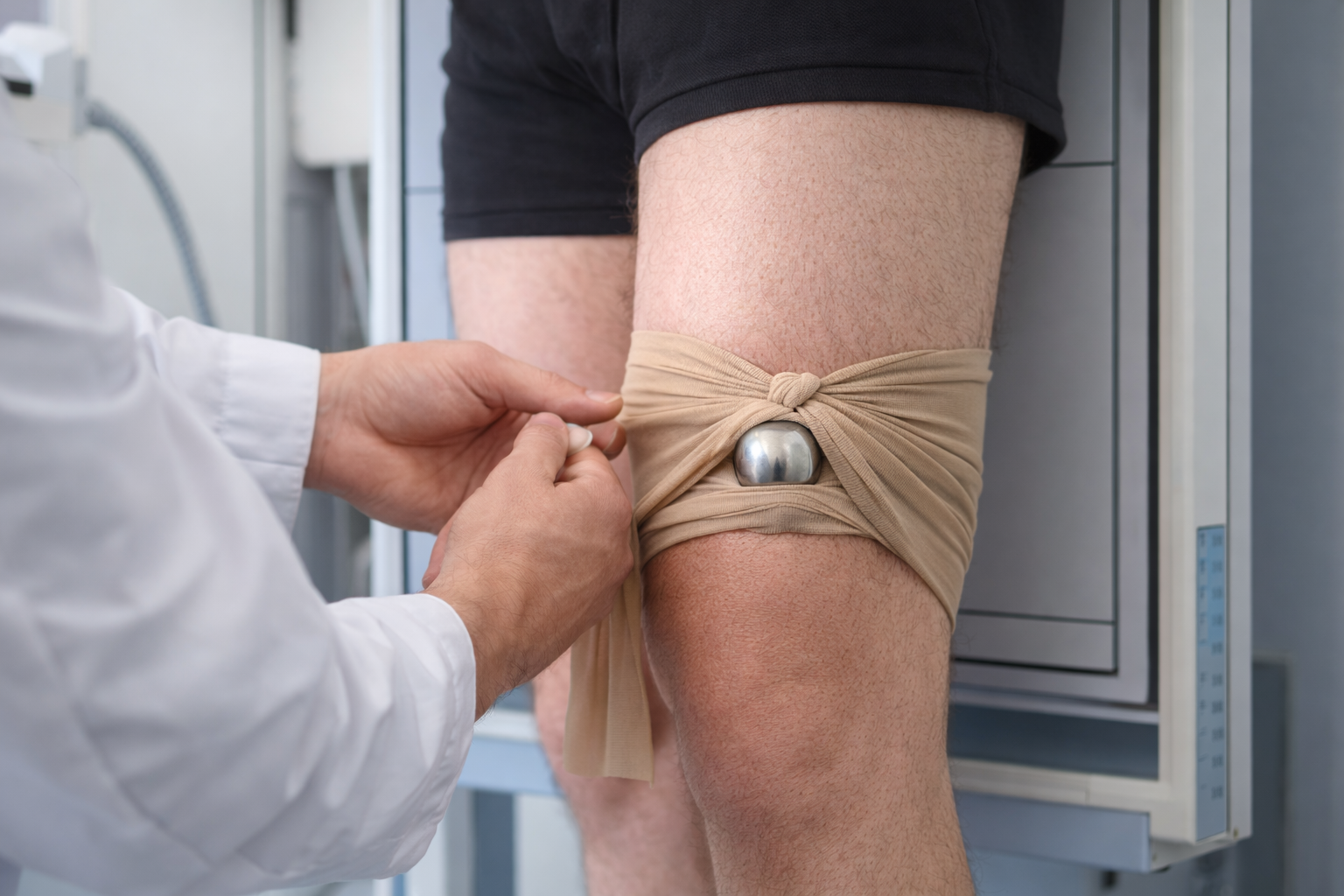
Successful hip replacement surgery begins long before the first incision. Using standardised, accurately calibrated radiographs, appropriately scaled implant templates allow surgeons to systematically evaluate the patient's bony anatomy.
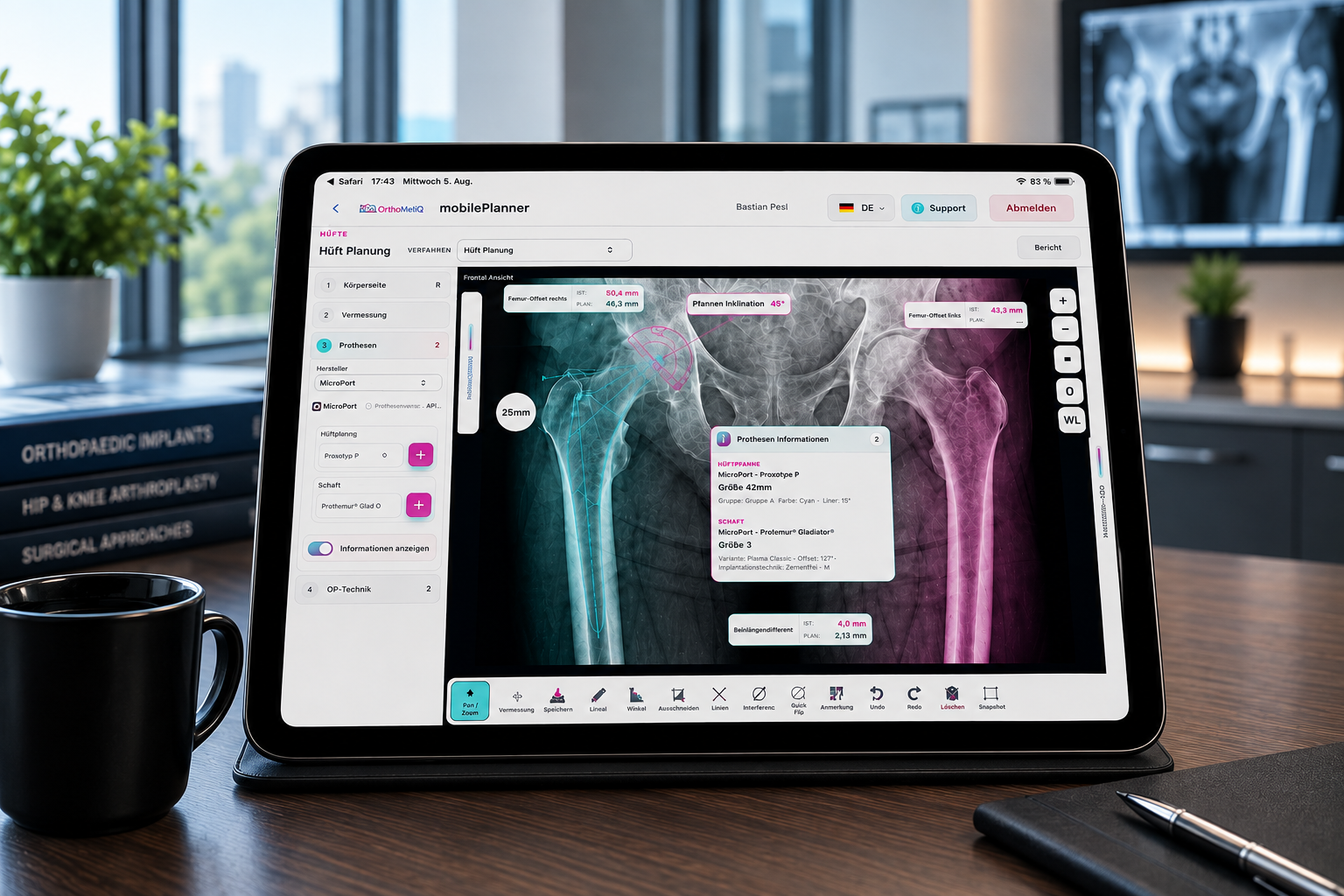
Particular attention is given to anticipated implant dimensions, the hip centre of rotation (COR), femoral offset (FO), leg length discrepancy (LLD), and the positioning of the acetabular and femoral components.
Assessment of the femoral neck-shaft angle (CCD angle), the intended femoral neck resection level and acetabular cup inclination are equally relevant elements of preoperative analysis.
However, anatomical reconstruction cannot be reduced to a single set of standardised angles. Individual morphology, together with the functional relationship between the spine, pelvis and hip joint, must always be considered.
Digital Implant Templating: Making Anatomy Visible
Traditional planning with transparent implant templates has increasingly evolved into digital radiographic planning.
Digital templating enables appropriately scaled implant representations to be superimposed onto radiographic images, allowing different implant sizes, positions and geometric relationships to be assessed and documented before surgery.
Scientific studies support the value of conventional two-dimensional templating. Three-dimensional planning methods may provide greater accuracy in predicting implant dimensions, particularly in patients with complex anatomical characteristics. However, improvements in planning accuracy do not necessarily translate into superior long-term clinical outcomes.
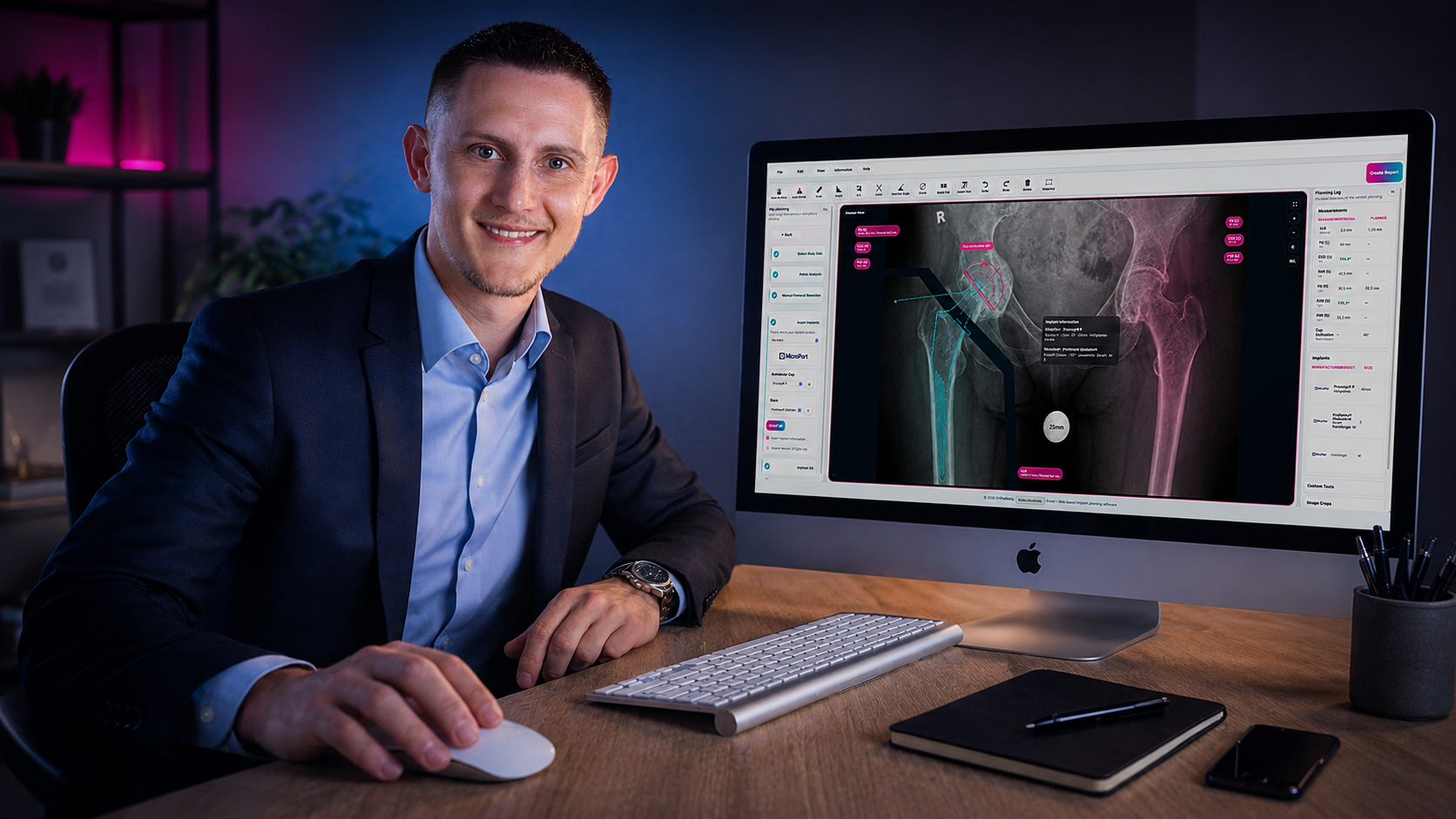
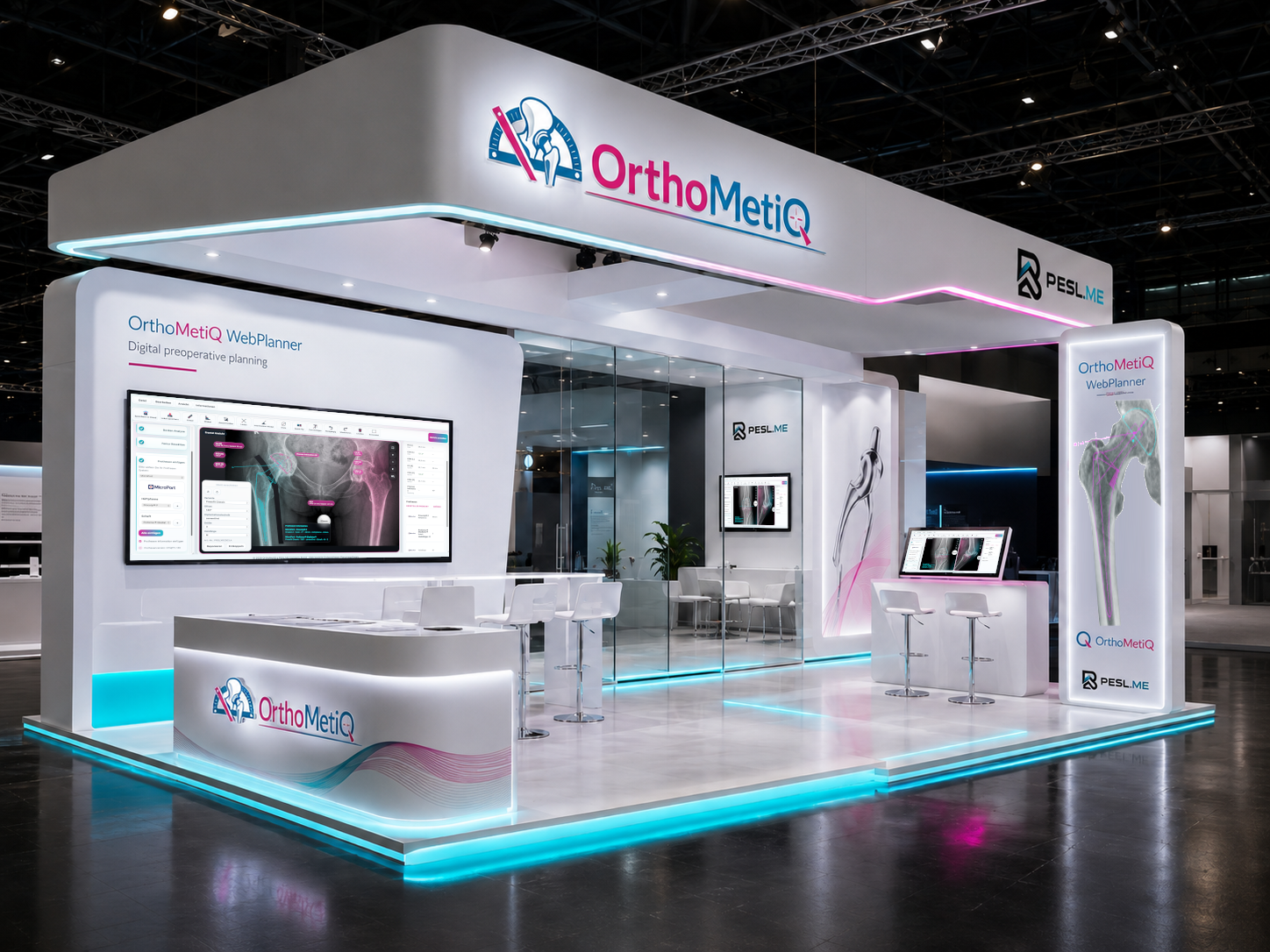
OrthoMetiQ WebPlanner and mobilePlanner bring these principles of digital orthopaedic planning into an accessible environment, enabling anatomical measurements and implant-related planning concepts to be explored through a web browser or on an iPad for educational, research, demonstration and visualisation purposes.
Precision Begins with Understanding Anatomy
Preoperative planning provides a structured foundation for recognising anatomical variations, estimating implant dimensions and understanding the geometric relationships that influence hip biomechanics.
Nevertheless, it remains a preparatory process. Definitive implant selection and positioning require clinical assessment and intraoperative verification.
The fundamental principle remains unchanged: Excellent hip arthroplasty does not begin with implant insertion. It begins with a thorough understanding of the anatomy that must be reconstructed.
Scientific references: German Arthroplasty Registry (EPRD), Annual Report 2026; EFORT Open Reviews (2019), Total Hip Arthroplasty Planning; Journal of Clinical Medicine (2022), Imaging in Hip Arthroplasty Management – Part 1: Templating.
Disclaimer: OrthoMetiQ WebPlanner and mobilePlanner are currently not certified medical devices. Both applications are intended exclusively for demonstration, education, research and visualisation purposes and must not be used for clinical surgical planning or medical decision-making.