Preoperative planning is far more than the selection of an implant size. It defines the surgical objective before the procedure begins: What is the patient’s individual anatomy? Which reconstruction is required? Which anatomical deviations and alternative strategies must be considered?
I have worked in digital implant templating for nearly 20 years. Throughout that time, one principle has remained unchanged: Structured planning reduces avoidable uncertainty before it becomes an intraoperative challenge.
Understanding Anatomy Before Altering It
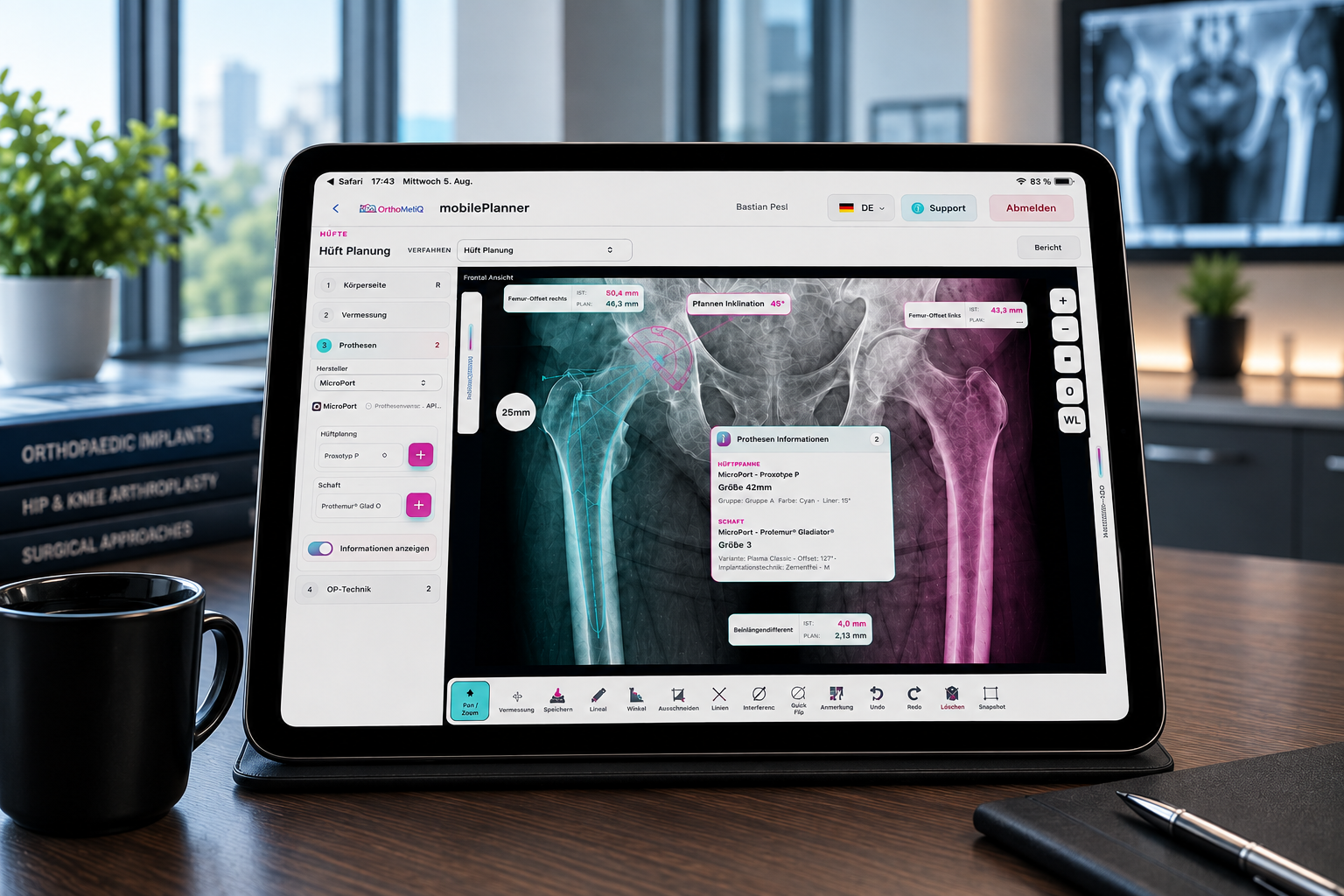
In total hip arthroplasty, digital templating enables the preoperative assessment of leg length, femoral offset, centre of rotation, CCD angle, femoral head diameter, resection level and anticipated component position.
These parameters are fundamental to restoring the patient’s individual joint geometry and may influence stability, soft-tissue tension and postoperative function.
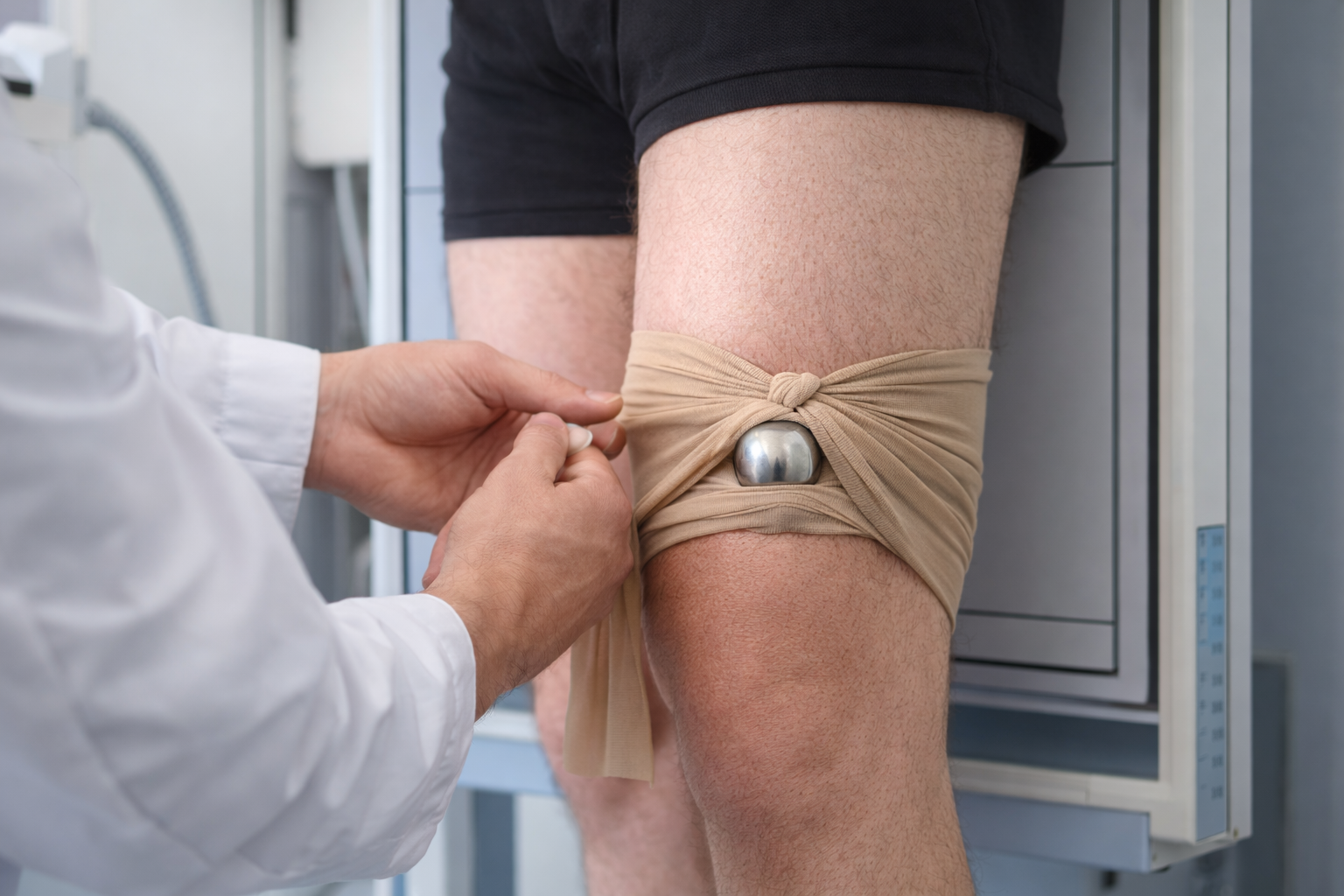
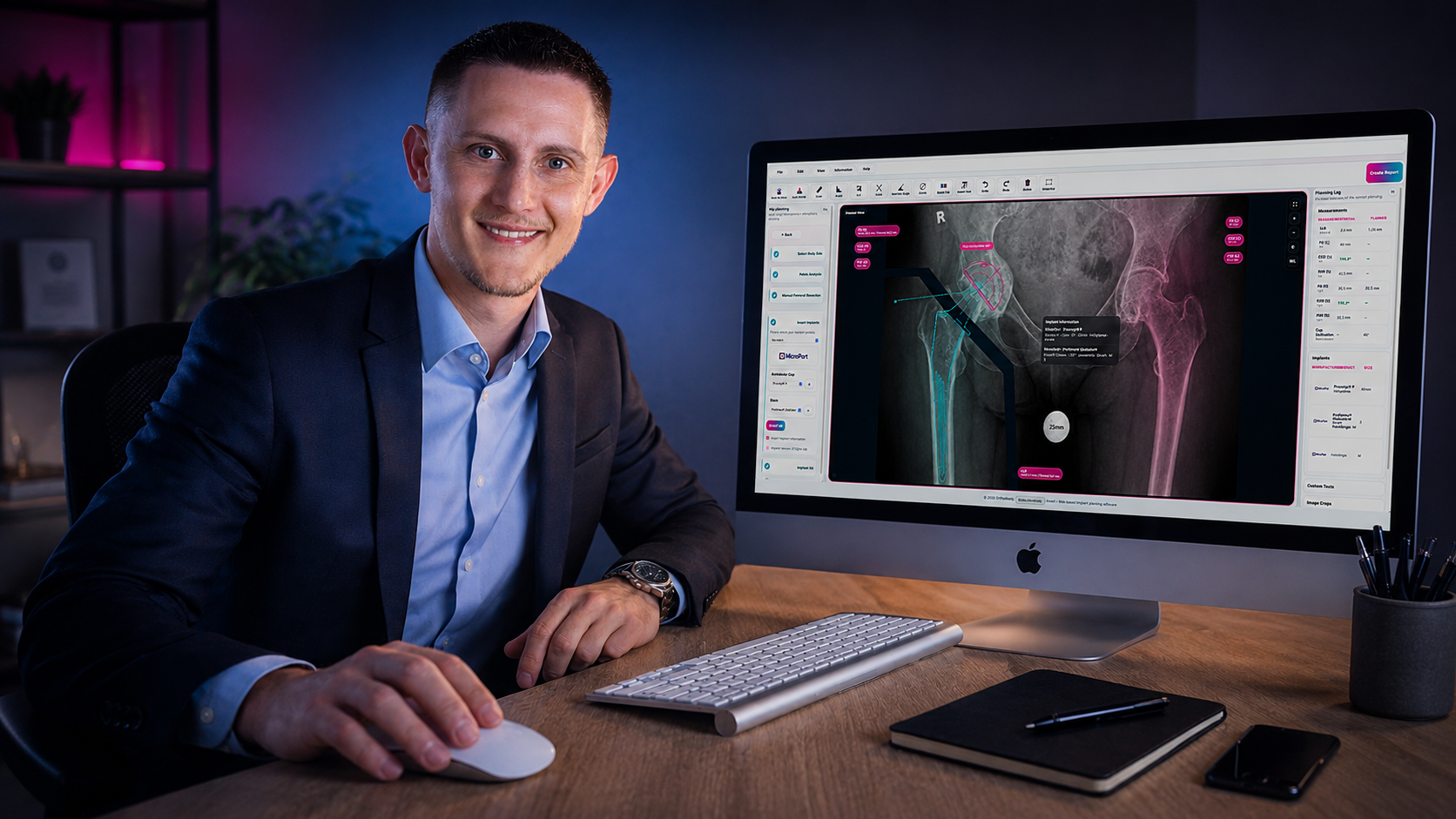
The OrthoMetiQ WebPlanner brings these elements together within a structured digital workflow. Following image calibration, anatomical reference points can be analysed, manufacturer-specific implants can be positioned and the effects of individual planning decisions can be assessed directly.
The Hip Is a Functional System
Pelvic orientation changes between standing and sitting. As a result, the functional orientation of the acetabulum also changes.
Assessing pelvic tilt, sacral slope and spinopelvic mobility can therefore provide clinically relevant information for patient-specific acetabular cup planning.
The OrthoMetiQ WebPlanner enables functional radiographs to be analysed separately and compared with one another. Cup positioning is therefore evaluated not only as a static measurement, but within the patient’s individual functional context.
Precision in Knee Surgery Also Begins with Measurement
In knee arthroplasty and corrective osteotomy, the mechanical axis, origin of deformity, correction angle, wedge height and tibial slope are central planning parameters.
Digital alignment analysis and correction planning support the surgeon in preparing the intended result systematically and evaluating different surgical strategies before entering the operating theatre.
Planning Creates Surgical Control
The clinical value of digital templating does not lie in the promise of flawless prediction. It lies in structured preparation.
Implant sizes and alternatives can be assessed in advance, anatomical challenges can be identified and surgical decisions can be documented transparently.
Within the OrthoMetiQ WebPlanner, measurements, implants and individual planning steps remain visible in a central planning log. The final report provides a clear and reproducible record of the intended surgical concept.
Not a Substitute for Experience, but Its Consistent Application
Digital planning does not replace surgical expertise or the final intraoperative decision. Its reliability remains dependent on image quality, accurate calibration, correct patient positioning and validated implant data.
It does, however, establish one essential condition: The surgical objective is analysed, precisely defined and transparently documented before the procedure begins.
A plan does not perform the operation. But it ensures that less is left to chance when the operation begins.